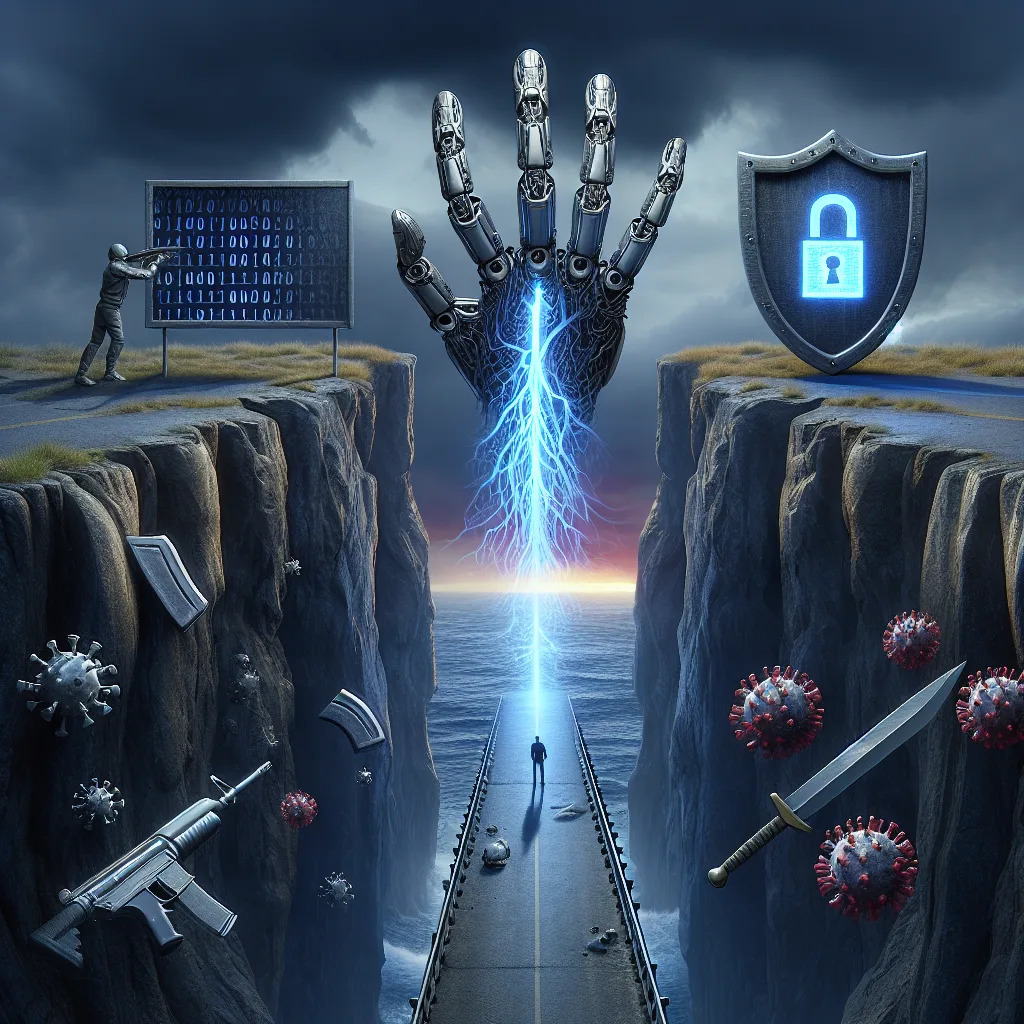
Autonomous Agents and the New Frontier in Cybersecurity
The digital battleground is evolving before our eyes. In a landscape where cyber threats have grown exponentially in both sophistication and scale, advances in artificial intelligence are beginning to level the playing field between attackers and defenders. NightDragon CEO Dave DeWalt recently offered a perspective that is both promising and cautious: with the advent of scalable, agentic AI, chief information security officers (CISOs) may soon be able to deploy tens of thousands of autonomous agents—a potential paradigm shift that could redefine the resource-intensive field of cybersecurity.
 In an era marked by rapid technological transformation, the traditional tug-of-war between cyber attackers and defenders is being reconfigured. While earlier defenses relied heavily on human vigilance and manual patching of vulnerabilities, today’s threats require a more agile, automated response. Agentic AI, with its ability to operate semi-independently, promises to fill that gap. However, as cybersecurity experts caution, the move toward highly autonomous systems also brings forth questions about reliability, accountability, and control.
Historically, cybersecurity has been a realm of reactive measures, where organizations scrambled to patch breaches and remediate exploited vulnerabilities. The turn of the millennium saw a gradual progression towards more proactive strategies, yet the pace of change has often outstripped the speed of human decision-making. In this context, the idea of deploying not a few, but potentially 100,000 autonomous agents, as proposed by DeWalt, is both unprecedented and compelling. This shift is underpinned by ongoing breakthroughs in machine learning, natural language processing, and real-time threat analysis.
At its heart, the push toward agentic AI reflects an industry grappling with an ever-growing shortage of cybersecurity talent. As malignant actors continue to evolve new techniques—from ransomware to sophisticated state-sponsored attacks—the sheer volume and complexity of incidents demand an equally powerful automated defense mechanism. NightDragon’s CEO explains that AI’s ability to perform continuous, high-speed analysis and rapid response may soon reduce the reliance on expanding human teams, thereby alleviating a long-standing resource constraint in the cybersecurity sector.
Today, major corporations and government agencies are already piloting AI-driven systems designed to monitor networks, detect anomalies, and even execute immediate countermeasures. These systems, built on the premise of autonomous operation, are not entirely new but are now entering a phase of maturity that could see them handling critical security functions. The approach is supported by real-world data: in 2022, cybersecurity investments in AI-related defensive technologies grew by nearly 30%, reflecting a broader consensus about the promise of these tools.
Why does this matter? The integration of agentic AI in cybersecurity heralds both efficiency and risk. On one hand, with the ability to process vast amounts of data in real-time, AI can potentially identify threats long before they culminate in a major breach. On the other hand, as the defensive capabilities become automated, adversaries too are exploring ways to leverage AI for offensive operations. In this high-stakes game, the very technology that promises to protect could be repurposed to outsmart its creators—raising crucial questions about the inherent vulnerabilities in a system that increasingly relies on self-governance.
- Efficiency Gains: Autonomous AI can perform routine monitoring, freeing skilled cybersecurity professionals to focus on strategic tasks.
- Scalability: Deploying thousands of agents across a global network could shorten reaction times and reduce the window of vulnerability during an attack.
- Risk of Overreliance: Dependence on automated systems may lead to unforeseen vulnerabilities if AI algorithms are exploited or malfunction.
Cybersecurity veteran Dr. Rebecca Wynn of the Cyber Defense Institute notes, “The dual-use nature of AI in cybersecurity is its most challenging aspect. While autonomous agents present a clear advantage in detecting and countering threats, they must be designed with fail-safes to prevent potential misuse. This technology, if not rigorously controlled, could also be turned against the very organizations meant to benefit from it.” Dr. Wynn’s comment underscores the necessity of a measured approach, one that balances innovation with caution.
One particularly important facet of this evolution is the role of regulatory oversight. With legions of autonomous agents operating potentially without continuous human intervention, accountability becomes a complex issue. The legal framework surrounding automated defense measures is still in its infancy, and policymakers worldwide are keenly observing these technological developments. In nations like the United States, discussions in Congress have begun to touch on the need for robust standards that ensure AI systems are both transparent and controllable. These conversations are essential to safeguard public trust in a digital age increasingly governed by algorithms.
It’s also crucial to consider the geopolitical implications. As cyber capabilities become more decentralized and autonomous, the traditional methods of attributing cyberattacks and enforcing international norms are under strain. Enhanced AI defenses, while bolstering national security on one hand, could add a layer of strategic ambiguity on the other. Military and diplomatic experts caution that the widespread deployment of agentic AI might create an arms race in cyber capabilities, further complicating the already delicate balance of cyber deterrence on the global stage.
Looking forward, the interplay between agents of cyber offense and defense will likely define the next chapter in global security. The convergence of AI and cybersecurity is poised to drive rapid technological change, potentially altering how organizations plan for and respond to cyber threats. Policy makers and industry leaders alike must pay close attention to developments in AI, ensuring that innovations in defense do not inadvertently exacerbate vulnerabilities. In this dynamic environment, transparency in AI system design and robust validation protocols will be key to ensuring that new technologies serve the collective interest without undermining trust in digital infrastructure.
In concluding, the advent of agentic AI in cybersecurity represents a double-edged sword. It promises unprecedented efficiency and scalability in defending digital territories while also raising the stakes for potential adversaries. Dave DeWalt’s cautious optimism points to a future where automated defense could become the norm, yet the risks associated with such rapid technological evolution cannot be ignored. As organizations increasingly rely on AI-driven agents, the broader community must grapple with the implications of entrusting critical infrastructure to systems that operate at machine speed but must ultimately serve human interests.
The fundamental question remains: in the relentless contest between cyber attackers and defenders, can we trust autonomous systems to protect our most vital digital assets, or will they inadvertently open new fronts for exploitation? As both policymakers and technologists navigate this uncharted territory, the balance between innovation and security will be the defining challenge of our time.



