"The 2026 Verizon Data Breach Investigations Report found that phishing accounted for 44% of the AI-assisted initial-access techniques examined."
How generative AI makes fake login pages more convincing
Fake login pages have long been a tool for credential theft, but generative AI is lowering the bar for attackers and raising the risk for organizations. According to the source material, attackers can now recreate company logos, page layouts and familiar authentication prompts with greater speed and fidelity, producing fraudulent pages that closely resemble the websites employees expect to see.
AI also enables personalization at scale. Attackers can generate tailored IT notifications that use a company's branding and specific authentication language to direct individual employees to fraudulent pages. Combined with lookalike domains that make only subtle changes to legitimate web addresses, these tactics increase the chance that users will not notice anything amiss before entering credentials.
Adversary-in-the-Middle (AiTM) attacks and session hijacking
Fake login pages do more than capture usernames and passwords. The source describes two escalation paths that make these phishes particularly dangerous.
- Multi-step replication: Some fraudulent pages replicate MFA workflows to collect one-time codes, which attackers can use before they expire to authenticate illicitly.
- AiTM session interception: More sophisticated attacks act as a proxy between user and service, relaying authentication in real time. After a user authenticates, an attacker can capture a session cookie or authentication token and use it to access the account without re‑prompting for MFA.
That second pathway—stealing active session tokens—means that even accounts protected by multifactor authentication can be accessed without the attacker ever entering a stolen password or completing another MFA challenge, the source material warns.

The cyber insurance questionnaire just landed. Now what?
SOC 2, HIPAA, insurance renewals - someone has to own security strategy. Nubivance provides fractional CISO leadership without the full-time salary.
Get a security leadWhy traditional phishing defenses aren't always enough
Security awareness training, email filters and URL blocklists remove many threats, but the source explains why these controls have gaps that AI-augmented phishing can exploit.
- Realism defeats recognition: Convincing replicas and organization-branded prompts can fool experienced users who might otherwise spot a generic phishing page.
- New domains and short lifetimes: Newly registered, short-lived phishing sites can evade reputation-based detectors and blocklists.
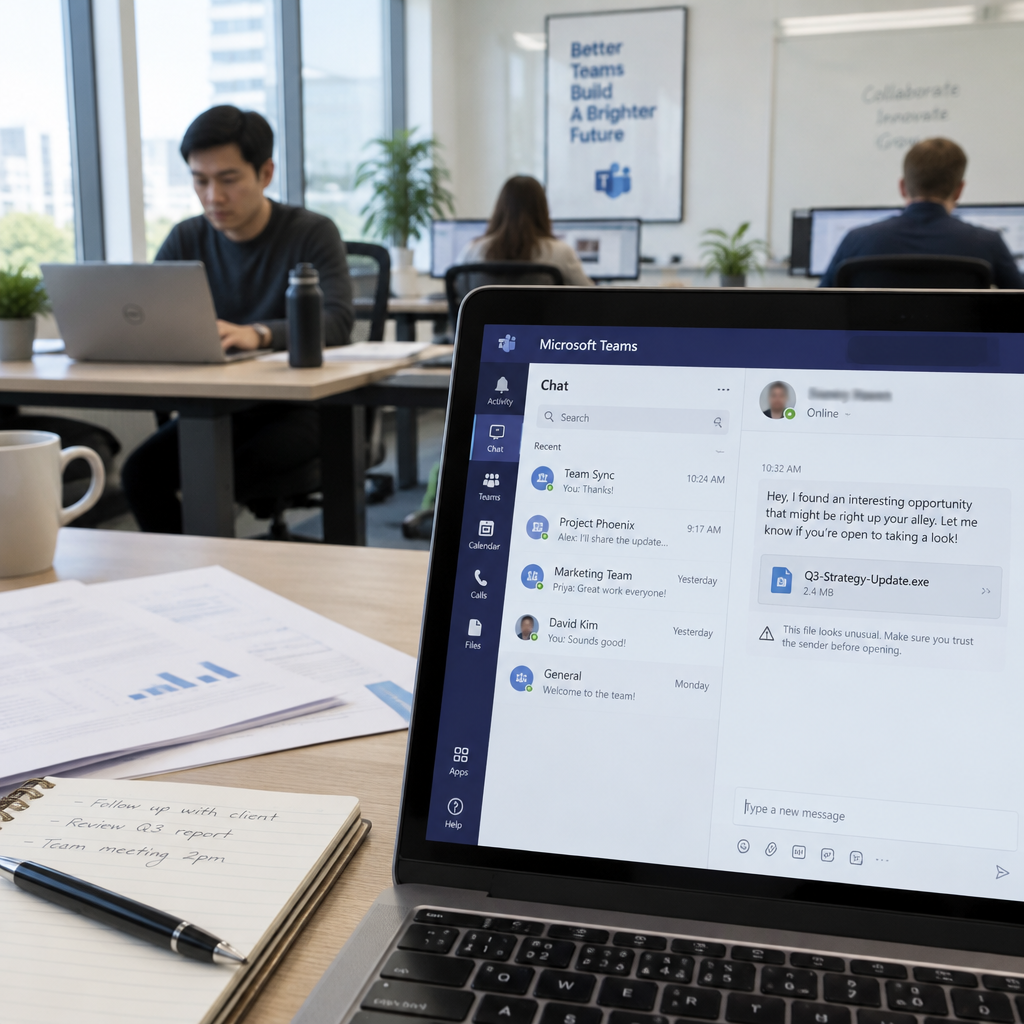
- Alternative distribution channels: Attackers distribute links using text messages, collaboration platforms and search ads, allowing campaigns to bypass email-based protections.
- Technical ambiguity: Lookalike domains can be hard to detect through URL inspection, and a valid HTTPS connection does not guarantee legitimacy.
These gaps, the source concludes, create a need for controls that assess the legitimacy of websites at the point where users are about to enter credentials.
Practical steps organizations can take
The source lays out concrete defenses organizations can adopt to reduce credential-harvesting risk and limit damage when accounts are compromised:
- Adopt phishing-resistant MFA and passkeys: FIDO2 security keys and passkeys use cryptographic authentication tied to website domains to reduce credential theft via fraudulent login pages.
- Implement browser-level phishing protection: Browser-based tools can detect look-alike domains, brand impersonation and suspicious URL patterns—AI-powered detection can flag credential-harvesting sites and warn users before they submit sensitive data.
- Monitor authentication and session activity: Continuous monitoring for unusual sign-in locations, unfamiliar devices and suspicious session behavior can help detect account compromise.
- Limit privileged access: Enforce least-privilege policies, remove unnecessary standing privileges and use just-in-time access to reduce what attackers can reach through a compromised account.
- Establish phishing response procedures: Clear processes for reporting suspected phishing, revoking sessions, resetting credentials and investigating access help contain incidents quickly.
What this means for technologists, procurement leaders, and end users
Technologists and security teams will need to expand defenses beyond email filters and training, prioritizing browser-integrated detection, session monitoring and deployment of phishing-resistant MFA. Procurement leaders should evaluate authentication technologies that bind credentials to legitimate domains—FIDO2 and passkeys are cited as specific options in the source material. End users will remain a critical line of defense but cannot be relied upon alone; tooling that warns users before they enter credentials, according to the source, can reduce the opportunities for credential harvesting.
The source closes with a concrete product example: "Keeper's AI-powered Phishing Protection uses on-device AI to identify suspicious websites, including look-alike domains and spoofed login pages, warning users before they enter their credentials." The article was contributed by Aranza Trevino at Keeper Security.
Fake login pages are not new; the tools and distribution have evolved. The combination of AI-crafted replicas, lookalike domains and AiTM techniques means organizations must pair user education with technical controls that stop credential theft at the point of entry and limit what attackers can do once inside.
Original story: AI-Generated Fake Login Pages Are Making Account Takeovers Easier — The Hacker News