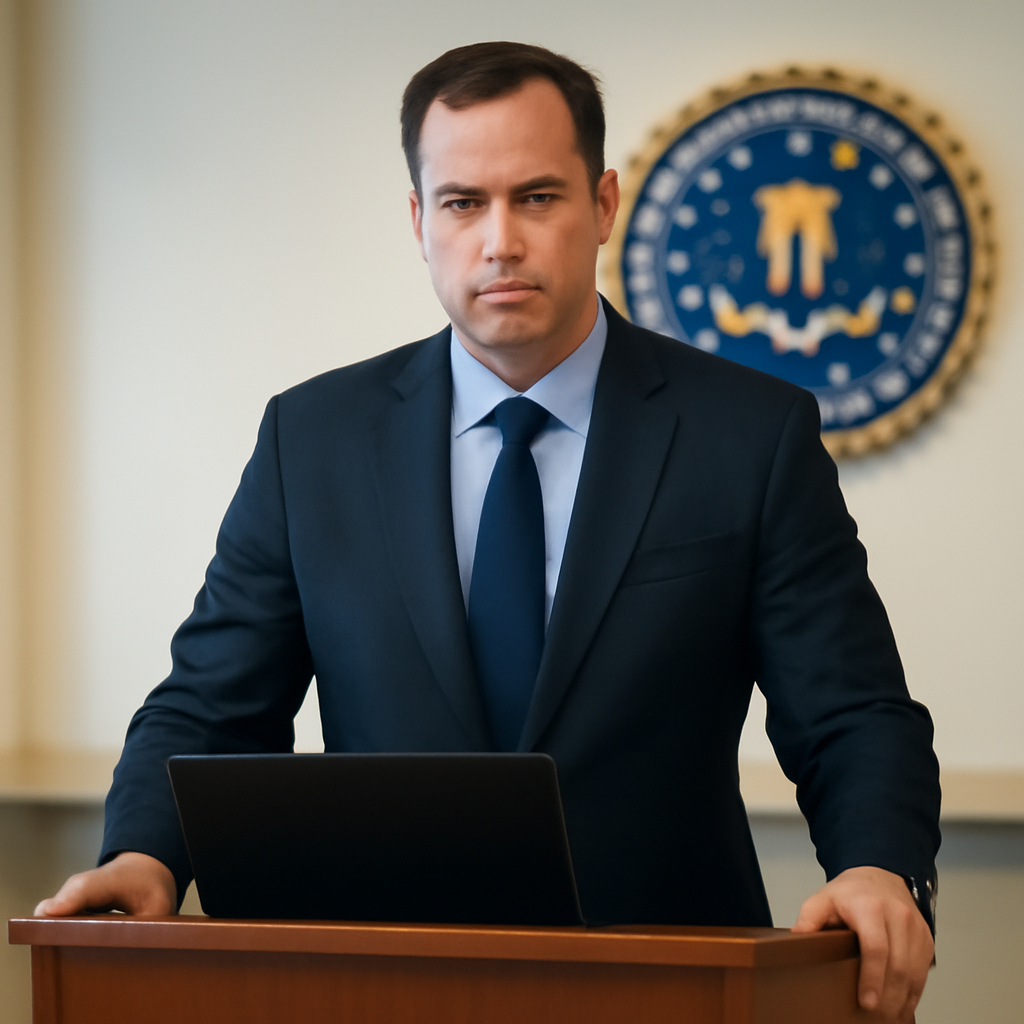
"Belford allegedly waged a lengthy online campaign, hiding behind spoofed social media and email accounts to harass, intimidate, and cause substantial distress to his victim with racist messages and AI-generated nude images," said U.S. Attorney Theodore S. Hertzberg.
The indictment and arraignment
Anthony Belford, a 21-year-old New York man, was arraigned June 10 after a federal grand jury returned an indictment charging him with one count of cyberstalking. According to court documents cited by the Justice Department, Belford and the victim had been students at the same college during the 2023–2024 academic year. When the victim transferred to a Georgia college in August 2024, Belford allegedly continued — and escalated — his campaign targeting the victim there.
Alleged tactics: AI-generated nudes, impersonation, and spoofed accounts
Prosecutors say Belford created multiple fake social accounts between January and March 2025 to impersonate the victim and to distribute intimate material without consent. The indictment reportedly lists fabricated Instagram, LinkedIn, Reddit, X, Strava, and Yahoo accounts used to post AI-generated nude images and to spread false claims that the victim had made racist remarks about Black students and anti-Muslim statements.
Specific examples in the court documents include an allegedly fake LinkedIn profile that used an AI-generated nude image of the victim as its profile picture, and a spoofed Yahoo email account used to send an AI-generated nude image to the victim's mother. All alleged conduct is presented as part of a sustained campaign of online harassment intended to intimidate and cause distress.

This site is the portfolio.
OSINTSights runs on Cloudflare Workers, D1, R2, and Vectorize, with an AI pipeline on Hetzner ARM. Nubivance designed, built, and operates it. We do the same for clients.
See what we buildJustice Department guidance and enforcement posture
The Justice Department emphasized that federal law prohibits sharing or threatening to share intimate images, explicitly noting that protection extends to AI-generated images. The department urged victims to report violations to the FBI and to notify the Federal Trade Commission if online platforms fail to remove such content within 48 hours of a removal request. The FTC’s Take It Down platform was highlighted as a resource for people seeking help removing images and videos shared without consent.
Related federal cases cited by prosecutors
The Justice Department placed the Belford indictment in a broader context by noting two other March pleas: 22-year-old Jamarcus Mosley of Alabama pleaded guilty to cyberstalking, extortion, and computer fraud charges after prosecutors say he hacked into the social media accounts of hundreds of young women; and 26-year-old Kyle Svara of Illinois pleaded guilty to hacking nearly 600 women's Snapchat accounts to steal private nude photos that were later traded or sold online. The department used those cases to underscore patterns of digital exploitation and the range of tools — from hacking to alleged AI-enabled impersonation — implicated in recent prosecutions.
What this means for the victim, colleges, and online platforms
- For the victim: The indictment frames the alleged harm as prolonged and multi-channel, involving impersonation, family-targeted messaging, and distribution of intimate AI-generated images. Prosecutors have signaled they will pursue criminal accountability under federal cyberstalking statutes and related authorities.
- For colleges: The alleged conduct began while both parties were enrolled at the same institution and continued after the victim transferred. That continuity underscores how off-campus digital harassment can follow students across campuses and into new states, presenting administrative and safety challenges for colleges that must balance privacy, discipline, and victim support.
- For online platforms: The complaint describes use of multiple mainstream services — Instagram, LinkedIn, Reddit, X, Strava, and Yahoo — and alleges spoofing of an email account. The Justice Department’s reminder about the FTC’s 48-hour removal expectation places providers and users alike at the center of rapid takedown and reporting workflows.
The indictment in Belford’s case commits a federal prosecutor to prove the alleged campaign met the legal standard for cyberstalking. For now, the record released by the Justice Department and the arraignment on June 10 provide a clear snapshot: prosecutors say a young man used AI tools and forged identities across platforms to target a classmate and her family, and federal authorities are invoking both criminal statutes and consumer-protection pathways to respond. The case will proceed in court where those allegations will be tested.