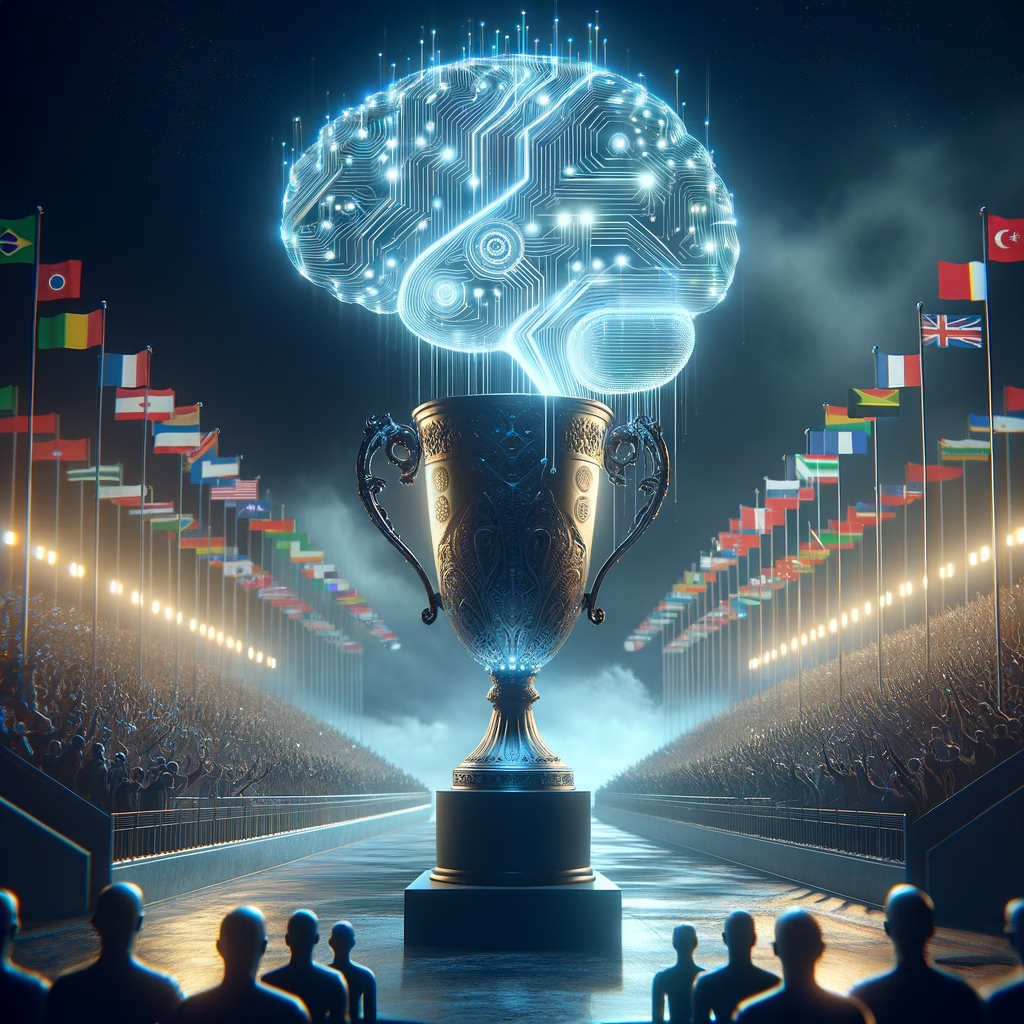
In an era where cyber threats loom larger than ever, the need for innovative defense mechanisms has never been more critical. The recent announcement of Team Atlanta as the winners of the AI Cybersecurity Challenge (AIxCC) at DEFCON—securing a staggering $4 million prize—raises questions about the role of artificial intelligence in safeguarding our digital landscape. What does this victory signify for the future of cybersecurity?
The AI Cybersecurity Challenge was initiated to harness the power of artificial intelligence in a domain where traditional methods often fall short. The competition, held in the frenetic atmosphere of DEFCON, brought together an array of talented teams from across the globe, all vying to address the pressing challenges posed by cyber adversaries. The stakes were high, and the results impactful.
Team Atlanta’s victory is notable not only for the prize money but also for the innovative solutions they presented. Their approach combined advanced machine learning algorithms with real-time threat detection capabilities, illustrating how AI can be effectively leveraged to outsmart increasingly sophisticated attackers. According to Ryan McGeehan, a prominent figure in the cybersecurity community, “This competition showcases the potential of AI as a transformative force in our ongoing battle against cybercrime.”
While the technological achievements are commendable, they also prompt a range of responses from various stakeholders. For technologists, the challenge is an exciting exploration of what is possible with AI. Developers and engineers are now encouraged to think outside the box, innovating beyond conventional parameters. Meanwhile, policymakers are faced with the reality that as defenses evolve, so too do the tactics employed by cybercriminals. The constant back-and-forth dynamic highlights a race that may have no true finish line.
Users, particularly those in vulnerable sectors such as healthcare and finance, may feel a mixture of hope and skepticism. As they increasingly rely on digital systems, the stakes are personal and financial. Trust in AI solutions must be earned, and their efficacy continually validated. Critics often raise concerns about privacy and the potential for AI to create new vulnerabilities, reminding us that technology is not inherently good or bad; it is how it is employed that truly matters.
Adversaries, on the other hand, are likely analyzing these developments with keen interest. The evolution of AI-driven defenses means that attacks must also evolve, forcing cybercriminals to innovate continually. This cat-and-mouse game is a sobering reminder that with every technological advancement, new vulnerabilities may arise, and the threat landscape can shift dramatically overnight.
The victory at DEFCON symbolizes a critical juncture in the cybersecurity narrative. As Team Atlanta celebrates, the broader implications of their success begin to unfold. Will this breakthrough lead to a new paradigm in cyber defense, or are we merely witnessing the first act in a play with unpredictable twists? The complexities of cybersecurity demand not only technological solutions but also a comprehensive understanding of human behavior and motivations. How we respond to this challenge will define our digital future.
As we stand on the precipice of technological evolution, the question remains: can we balance innovation with accountability in a world where the line between security and privacy becomes increasingly blurred? The answers may determine the trajectory of cybersecurity for generations to come.
Source: Infosecurity Magazine



