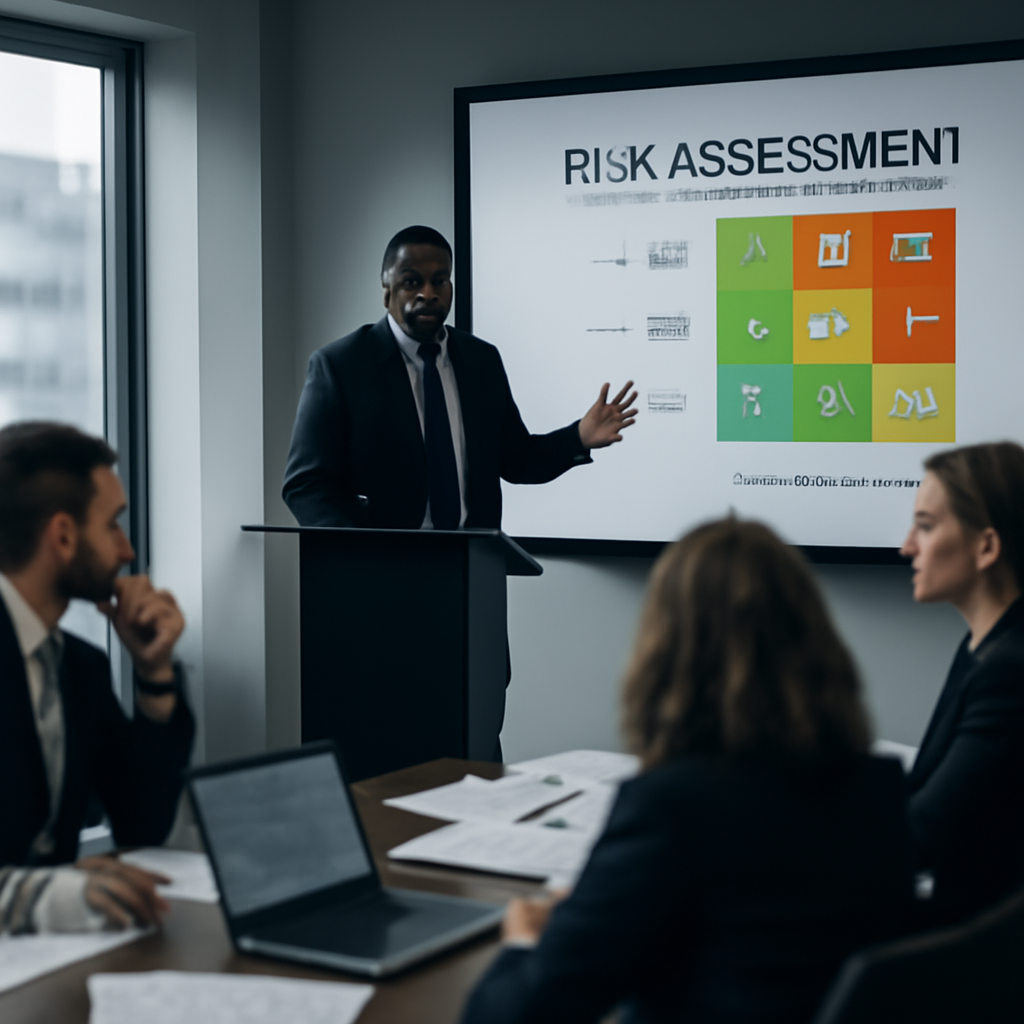
“87% of enterprises see AI-related vulnerabilities as the fastest-growing cyber risk.” That line, pulled from recent research cited in the source material, frames the contradiction at the heart of today’s corporate risk picture: the same technology amplifying attackers’ reach is being repurposed inside companies to measure, manage and mitigate that very risk.
AI-related vulnerabilities and the risk landscape
The source material identifies AI-based phishing attacks as a specific escalation in adversary capability, noting they are "allowing attackers to succeed at a higher rate than ever." Enterprises cited three principal concerns tied to AI-driven exposure: data breaches, social hacking, and critical infrastructure disruption. Against that backdrop, the research finding that 87% of enterprises view AI-related vulnerabilities as the fastest-growing cyber risk is not a rhetorical flourish — it is the baseline condition driving investment and strategic change.
How AI turns qualitative GRC into quantitative metrics
One of the clearest threads in the reporting is that AI is changing governance, risk, and compliance (GRC) from a largely qualitative discipline into a metrics-driven function. The source says AI can "turn risk management from a qualitative exercise into a quantitative, metrics-backed growth strategy" by contextualizing risk across the enterprise and by enabling risk teams to "clearly demonstrate the value of good risk management" to decision-makers. That shift matters because, even as "more than two-thirds of risk teams say they have seen increased GRC funding over the past three years," many still "struggle to demonstrate the ROI needed to justify continued investment."

The cyber insurance questionnaire just landed. Now what?
SOC 2, HIPAA, insurance renewals - someone has to own security strategy. Nubivance provides fractional CISO leadership without the full-time salary.
Get a security leadResource efficiency: automating repetitive GRC tasks
Practical efficiencies are one of the easiest gains to measure. The source points to repetitive, time-consuming tasks — collecting and classifying evidence, updating controls, sending reminders — that bog down risk teams. Modern AI-based GRC solutions can automate these tasks "to one degree or another," freeing "human employees to focus on more impactful and engaging tasks." The recommended approach to quantifying that efficiency is straightforward and arithmetic: estimate hours saved on repetitive tasks, multiply by hourly rates, and roll that up across teams. The piece is explicit that across an organization those savings "add up quickly."
AI enabling revenue, market access, and deal flow
Beyond cost savings, the source highlights revenue-side impacts. AI-driven GRC features — specifically cross-mapping, automated evidence testing, and enhanced data analysis — reduce the risk of regulatory or compliance violations by continuously evaluating alignment. That improved transparency and continuous compliance posture helps firms "enter new markets and unblock deals that may be stalled in the pipeline." The suggested measurements are revenue generated from newly signed contracts, shortened sales timelines, and market entry metrics: each is presented as a "relatively simple" data point that can be used to justify further investment in AI-backed GRC.
What this means for GRC teams, executives, and security teams
- GRC teams: Expect to shift from evidence collection and manual control updates toward oversight of AI workflows and interpretation of quantitative risk metrics; the source positions AI as an operational ally that "allows risk management teams to provide business leaders with the information they need."
- Executives and procurement leaders: The reporting suggests they will be asked to evaluate AI-backed GRC not just as a cost center but as a potential business enabler — a tool that both reduces exposure and accelerates deals through better compliance signaling.
- Security and risk professionals: They are advised to adopt AI not only to counter AI-enabled attacks but to model risk exposure over time — assigning structure to risks, estimating potential impacts, and tracking how those exposures fall as controls improve.
The source also recognizes a measurement problem common to risk functions: how to quantify prevented harms. It recommends proactively identifying key risks (from data breaches and insider threats to regulatory penalties and downtime), assigning potential impacts, and using annual studies on the cost of an average security incident to attach dollar values. Tracking those estimated exposures over time creates trend lines that connect GRC activity to company-level outcomes.
Final thought: the report’s refrain is plain and practical — in a risk landscape increasingly shaped by AI, organizations can and must "fight fire with fire." The work ahead, according to the source, is less about choosing whether to use AI in risk management and more about measuring, governing and demonstrating the business value of those AI tools so that risk reduction becomes visible, actionable and fundable.