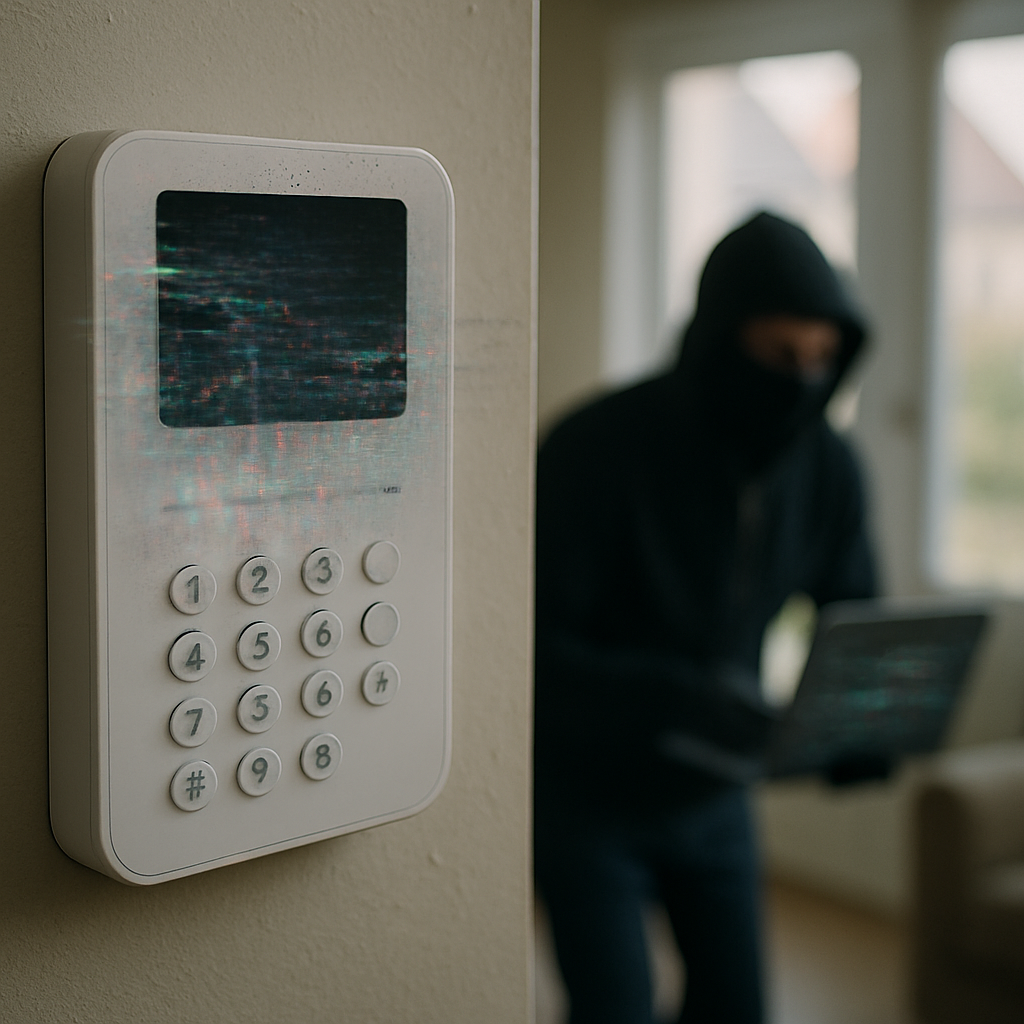
On Apr. 20, ADT discovered unauthorized access to customer and prospective-customer data and immediately terminated the access while launching an investigation.
Apr. 20 discovery and ADT's response
According to ADT, the company detected the unauthorized activity on Apr. 20, cut off the access, and opened an investigation that determined personal information had been stolen. ADT said it found no instances in which payment information—such as bank accounts or credit cards—were accessed, and that customer security systems were not affected. The company also reported that all affected individuals have been contacted.
What data was exposed
ADT's investigation found the compromised dataset was mostly limited to three core fields:
- Names
- Phone numbers
- Addresses
ADT also said that, in some instances, additional data elements were impacted, including birth dates, tax IDs, and the last four digits of Social Security numbers.

The cyber insurance questionnaire just landed. Now what?
SOC 2, HIPAA, insurance renewals - someone has to own security strategy. Nubivance provides fractional CISO leadership without the full-time salary.
Get a security leadShinyHunters' claim: vishing, an Okta SSO account and Salesforce
The group ShinyHunters has claimed responsibility for the incident and asserted it stole 10 million customer records. In its claim, ShinyHunters said it carried out a voice phishing (vishing) campaign that exploited an Okta single sign-on (SSO) account belonging to an employee. The group further asserted it leveraged that account to extract data from ADT’s Salesforce instance.
ADT has not confirmed the amount of data stolen and the company’s public statements do not corroborate the 10 million-record figure provided by ShinyHunters.
What this means for customers, technologists, and prospective customers
- Customers and prospective customers: ADT notified affected individuals; the types of data ADT reported as exposed—names, phone numbers, addresses and, in some cases, birth dates, tax IDs and last four Social Security digits—are precisely the elements that can be reused for identity verification and social engineering, which those individuals will need to watch for in follow-on fraud or phishing attempts.
- Technologists and security teams: The claim that a vishing campaign targeted an employee’s Okta SSO account and then accessed a Salesforce instance will focus attention on controls around SSO access, telephony-based social-engineering vectors, and data accessible through CRM systems.
- Prospective customers: Because ADT said the incident affected both current customers and prospective customers, organizations that share prospect data with ADT or evaluate ADT for procurement may seek clarification about scope and controls as part of vendor security reviews.
Investigation status and open questions
ADT has described what was found so far—the types of data exposed and the systems not impacted—but has not independently confirmed the quantity of records that ShinyHunters claims to hold. The company terminated the unauthorized access and continues its investigation. The claim that an Okta SSO account was used to access a Salesforce instance is specific and, if substantiated, pinpoints a sequence of attack vectors: social-engineering to obtain credentials or session access, then use of SSO to reach CRM-stored records.
Beyond ADT’s statement and ShinyHunters’ claim, the public record provided here leaves central questions to be resolved by the ongoing probe: the validated scope of records compromised, the precise mechanics by which the alleged SSO account was abused, and whether any further accounts or systems were involved. ADT’s notification to affected individuals is complete, according to the company, but the discrepancy over the number of compromised records remains the clearest outstanding item.