[SPONSOREDNUBIVANCE]
Know a small business winging it on security?
No IT department, no security budget, real exposure. Nubivance builds right-sized security foundations for small companies. Send them this.
Send it alongCybersecurity intelligence, threat analysis, and national security reporting.

Northrop Grumman and the US Air Force are working together to analyze the possibility of expanding the B-21 Raider Fleet beyond 100 aircraft, thanks to a flexible production agreement that allows for accelerated production. This comes on the heels of a 25 percent boost in annual B-21 production capacity.

Microsoft and over two dozen tech giants are calling on policymakers to back open-source AI, believing it can strengthen America's cybersecurity defenses and foster a vibrant tech ecosystem. By embracing open-source AI, the US can avoid relying on just a few closed systems and instead build a robust and diverse technological landscape.

Despite the high-profile absences at the recent NATO Summit, the alliance's ties with Indo-Pacific partners remain strong. For the second year in a row, leaders from Australia, Japan, New Zealand, and South Korea missed the summit, but the relationship endures.

Get ready to take a closer look at the UK's latest stealth fighter demonstrator, with BAE Systems releasing its clearest official photos yet, showcasing the aircraft's construction in unprecedented detail. The images give us a glimpse into the making of this cutting-edge tech, set to take to the skies from Warton by 2027.
Botnets just won't quit, and it's no surprise why - there's a thriving market for access to millions of IPs, making it easy for them to keep growing and snaring more victims. Residential proxy networks are fueling this expansion, with nearly 60 million victim IP addresses globally and a significant chunk of them right here in the US.

Federal agencies are revolutionizing their approach to cybersecurity by shifting from a focus on data volume to decision-quality outcomes, and those making intentional, decision-oriented data architectures are leading the way. By explicitly identifying the data needed to support operational decisions, these agencies are achieving clarity on data existence, location, and protection.

Canada has taken a significant step closer to joining the Global Combat Air Programme, announcing its new "observer" status - a strategic move that could pave the way for full membership and industrial collaboration in the future. This development comes as the UK reaffirms its commitment to GCAP with a substantial £8.6 billion investment over four years.

OnTrac recently suffered a network hack, resulting in a data breach that exposed customer information, with the incident detected on March 23 after an intrusion occurred between March 20-22. Fortunately, the company has no evidence of the stolen information being misused or published.
No IT department, no security budget, real exposure. Nubivance builds right-sized security foundations for small companies. Send them this.
Send it along
Security researchers uncovered a massive 470MB trove of 585 files detailing an automated cyberattack on Thailand's Ministry of Finance, led by the malicious Hermes AI Agent. The stolen data reveals a sophisticated operation, complete with web shells, exploit code, and logs that expose the attack's inner workings.

Hackers are targeting hotel Wi-Fi networks to steal Microsoft 365 accounts from unsuspecting travelers, with a widespread campaign affecting various industries across multiple countries. This sneaky tactic redirects visitors to attacker-controlled sites, putting business travelers at risk of having their sensitive information compromised.

BlueNoroff's phishing kit is a masterclass in deception, using Zoom lures and compromised industry contacts to trick victims into divulging their crypto wallet info. This sophisticated scam combines social engineering and malware to selectively target high-value victims.

Microsoft is launching a thorough investigation into its automated maintenance process after a recent outage, focusing on safety checks and process improvements to prevent future disruptions. The analysis comes on the heels of a significant disruption to Microsoft 365 services, affecting thousands of users.
The alarming reality is that unregulated AI has become a cybercrime game-changer, with 6,644 openly available models labeled as "uncensored" and "unfiltered" racking up over 22 million downloads in just 30 days. This staggering statistic proves that guardrail-free AI is no longer a hypothetical threat, but a readily accessible tool for malicious use.

A single exposed controller can be a seemingly minor issue, but in critical infrastructure, it can escalate into a major national security threat - and Iranian cyber attacks are actively targeting these vulnerabilities in US infrastructure. Stay ahead of these threats with expert guidance from trusted sources like CISA and FBI.

A newly discovered exploit, dubbed Certighost, lets low-privileged Active Directory users impersonate Domain Controllers, posing a significant threat to security. This vulnerability, tracked as CVE-2026-54121, allows attackers to obtain a certificate for a Domain Controller and authenticate as that machine.

Researchers have made a startling discovery: AI coding agents are surprisingly predictable, often generating identical fake names for tasks like skill installs and repository requests, making them vulnerable to exploitation by attackers. This weakness was found across multiple popular coding tools, with identical names being hallucinated up to 85% of the time for repository requests and 100% for skill installs.
Full-platform Rapid7 rollouts - InsightVM, InsightIDR, event sources, agents, tuning - by a Registered Partner who has done it at state-agency scale, including OT/SCADA.
Talk deployment
Thousands of Chick-fil-A customers are reeling after a credential stuffing attack compromised 13,322 accounts, exposing sensitive customer data over just three days in June. The breach allowed hackers to access a combination of customer info linked to Chick-fil-A One accounts, including names and more.

Microsoft's Bing Image processing pipeline had a shocking vulnerability that allowed hackers to inject malicious commands, thanks to two critical flaws discovered by XBOW. These flaws enabled attackers to gain alarming levels of access, running commands as the system's highest authority on both Windows and Linux hosts.

Europol has launched a crackdown on the violent extremist network 'The Com', flagging 4,340 URLs for removal after detecting sinister content that promotes self-harm and exploitation of minors. The operation, involving nine countries, aims to protect vulnerable users from coded messages and emojis that can have devastating effects.

The US is cracking down on overseas cybercrooks by cancelling their visas, a move aimed at curbing the $10 billion+ in scams that defraud American citizens every year. This targeted approach will deny visas to foreign nationals involved in cybercrime, including those behind investment scams and sextortion schemes that prey on vulnerable victims.

One phishing link was all it took to expose a critical flaw in ChatGPT's security, allowing hackers to create rogue AI agents with access to an employee's credentials and unchecked approvals. This vulnerability, known as AgentForger, put organizations at risk of being hijacked by autonomous AI agents controlled by attackers.
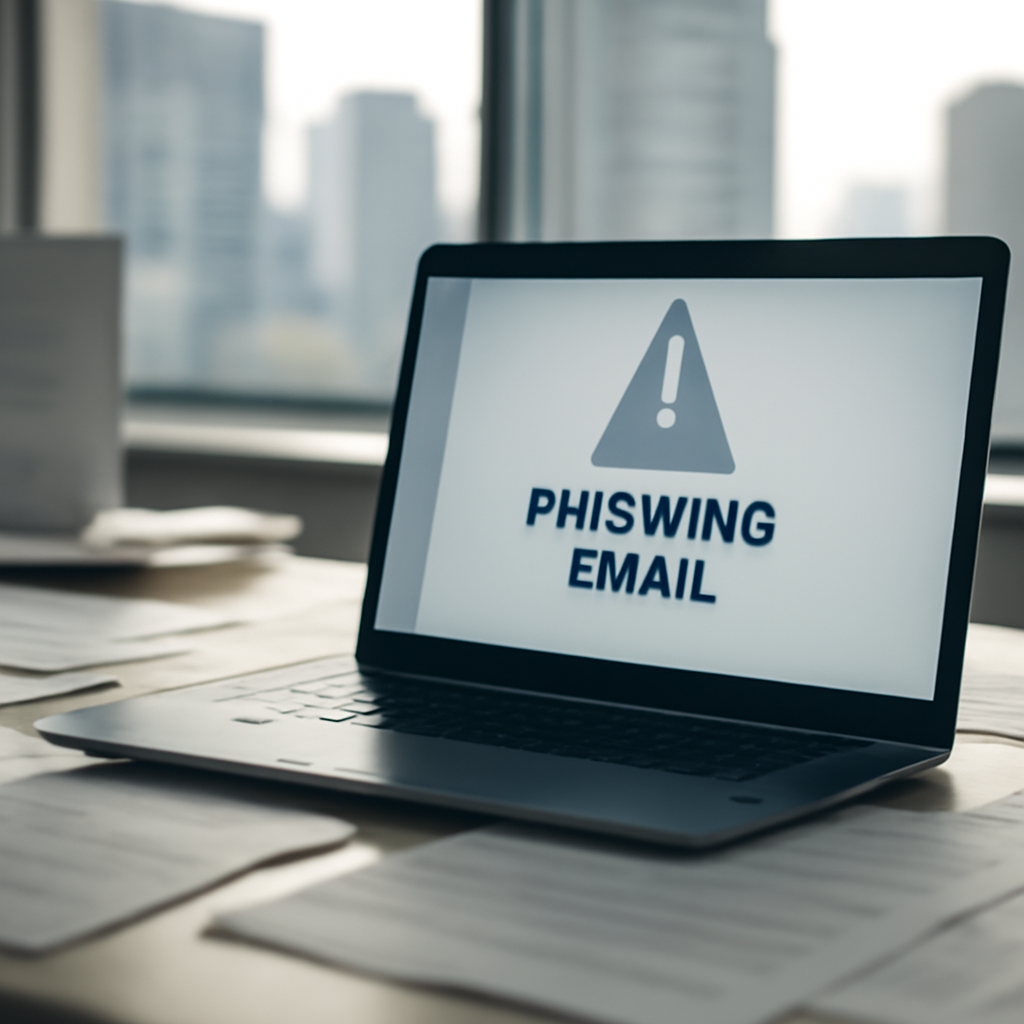
ChatGPT has become a hot target for phishing attacks, entering the top 10 most impersonated brands in just the second quarter of 2026, with scammers sending fake emails that mimic OpenAI's billing notices to steal sensitive info. This new trend signals where attackers are focusing their efforts next.

Discovering AI agents across your organization is just the starting line - the real challenge lies in controlling their actions to prevent potential security threats. Simply seeing what's out there isn't enough; it's time to take charge and enforce limits on these active actors.

Beware of hackers lurking on hotel Wi-Fi networks, as a global campaign is underway to steal sensitive credentials from unsuspecting travelers and businesses. Cyber attackers are exploiting weak spots in hotel routers and Wi-Fi systems to gain control and manipulate DNS settings.